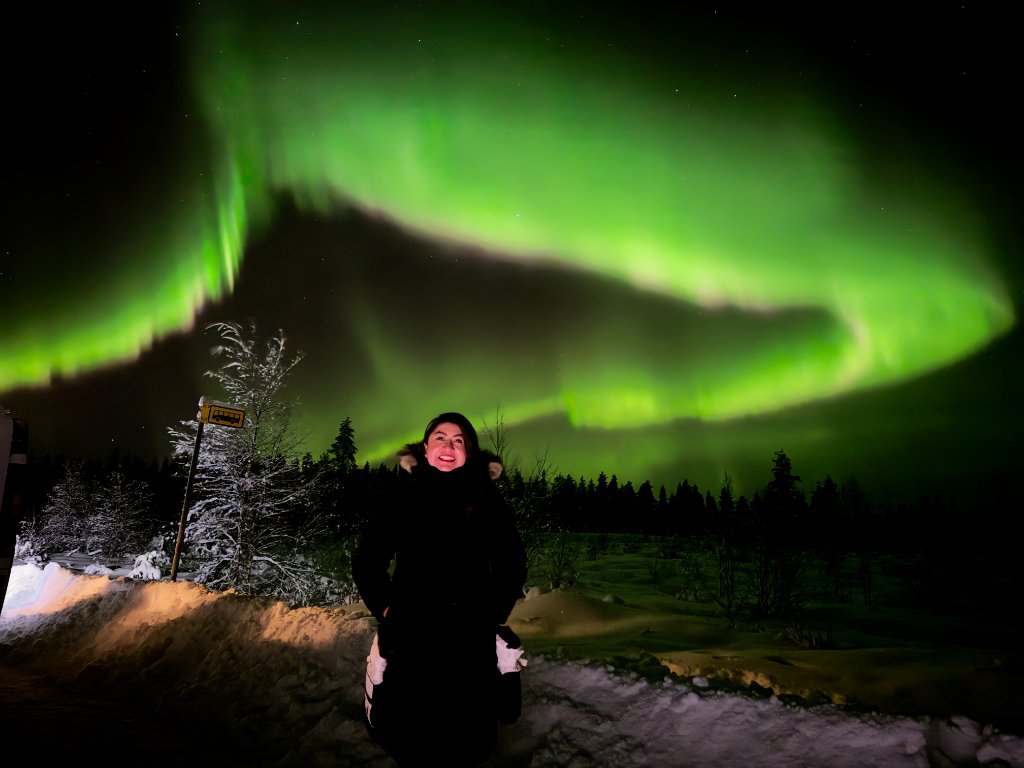
Swedish Lapland Northern Lights: Best Places & Season Guide
Why Swedish Lapland Is a World-Class Aurora Destination
Swedish Lapland lies well inside the auroral oval, the ring around the magnetic pole where the Northern Lights appear most often. Stretching from the Bothnian coast up to the mountains on the Norwegian border, the region offers long, dark winter nights, low light pollution and a genuinely dry, clear climate in its interior — a rare combination that makes aurora sightings more reliable here than in many better-known spots.
The headline destination is Abisko, a small village beside Lake Torneäsk around 200 km north of the Arctic Circle. Sheltered by surrounding peaks, Abisko sits in a pocket of unusually stable, cloud-free weather often called the “blue hole.” When neighbouring areas are overcast, the sky above Abisko frequently stays open — which is why aurora chasers travel from all over the world to stand under it.
The Best Places to See the Northern Lights
Abisko National Park is the classic choice. The Aurora Sky Station, reached by chairlift up Mount Nuolja, offers a high, dark vantage point away from village lights, with wide views over the lake and valley. Even from the village itself or the shore of Lake Torneäsk, displays can be spectacular on an active night.
Kiruna, Sweden's northernmost town and the regional hub, makes a practical base with an airport, hotels and easy onward transport to Abisko. Just outside Kiruna in Jässjukkäsvaara and the village of Jukkasjärvi — home of the original Icehotel — you can combine aurora hunting with husky sledding, snowmobiling and a night on a bed of ice. Further options include Björkliden and Nikkaluokta for travellers who want quieter, higher-altitude wilderness.
When to Go: Season and Best Months
The aurora season in Swedish Lapland runs from roughly mid-September to late March, when nights are long enough and dark enough for the lights to show. You do not need extreme cold — only darkness and a clear sky.
September and October bring milder temperatures, open water reflections on the lakes and frequently clear skies before the deepest winter sets in. December to February delivers the longest nights, full snow cover and the best odds of a strong, colourful display, though it is also the coldest period. March is a favourite of many guides: the days are lengthening, the snow is still deep and photogenic, and conditions are often stable.
How to Maximise Your Chances
Give yourself time. Plan at least three to four nights in the region rather than a single overnight — the aurora is driven by weather and solar activity, and more nights simply means more chances. Watch the local cloud forecast as closely as the geomagnetic (Kp) forecast; at these high latitudes even modest solar activity is enough for a good show if the sky is clear.
A knowledgeable local guide is worth it. Guides track real-time cloud and aurora data and will drive you to wherever the sky is opening up, which can mean the difference between a faint band on the horizon and curtains of green overhead. Dress in warm layers with proper insulated boots and gloves, and bring a tripod if you want to photograph the lights.
Planning Your Swedish Lapland Aurora Trip
Most travellers fly into Kiruna (often via Stockholm) and base themselves there or in Abisko, adding daytime Arctic experiences — huskies, reindeer, snowshoeing — around the evening aurora hunts. If you want to combine countries, Swedish Lapland pairs naturally with Finnish Lapland and Norwegian Tromsø on a single Nordic itinerary.
Ready to chase the lights in the Arctic? Our small-group Northern Lights expeditions are built around dark-sky timing and flexible, guide-led aurora hunts — explore our tours and let us help you plan the trip.
Ready to Experience It?
Plan Your Lapland Trip
Small groups, aurora guarantee, full Arctic gear included.