Lapland Packing List: Exactly What to Bring for Winter
TL;DR: Winter in Finnish Lapland is genuinely cold, but staying warm is a solved problem once you dress in three layers and cover the extremities. Bring thermal base layers, insulating mid layers and a windproof outer shell, plus proper gloves, hats and socks, and rent the heavy expedition gear locally rather than buying it. Pack light on everything else.
Start with the three-layer system
Everyone who stays warm in Lapland does the same thing: they layer. The trick is not one enormous coat but three cooperating layers you can add or remove as you move between a warm minibus, a frozen lake and a heated cabin.
- Base layer: merino wool or synthetic thermal top and leggings worn against the skin. Avoid cotton entirely, as it holds sweat and chills you. Pack two or three sets so you always have a dry one.
- Mid layer: a fleece or light down jacket, plus fleece or wool trousers for the coldest activities. This is the layer that traps warmth.
- Outer layer: a windproof, water-resistant shell jacket and trousers. It doesn't need to be heavily insulated if your mid layer is doing its job.
On our guided Northern Lights and safari tours, most guests spend the day cycling through these layers rather than sweating in one bulky coat.
Look after your hands, feet and head
Cold reaches you at the extremities first, so this is where careful packing pays off most. If your fingers and toes are warm, the rest of you usually follows.
- Gloves: a thin liner glove plus a thick insulated over-mitten. Mittens beat fingered gloves for warmth. Liners let you use a phone or camera without fully exposing your hands.
- Socks: merino wool socks, a few pairs, ideally with a thin liner sock underneath. Never wear tight socks, as circulation keeps toes warm.
- Head and face: a warm beanie that covers your ears, plus a neck gaiter or buff you can pull over your nose and cheeks. A balaclava is welcome on snowmobile days.
- Hand and toe warmers: disposable heat packs are cheap, weigh nothing and are a small luxury on long aurora hunts.
Footwear that actually copes
Ordinary winter boots from a mild climate often aren't enough. You want insulated, waterproof snow boots rated for genuinely low temperatures, with a grippy sole for icy pavements.
If you don't already own boots like these, don't rush out and buy a pair you'll wear once. For the heaviest cold-weather footwear and outer suits, our winter clothing rental is usually the smarter choice, and it's included or available on most departures. That keeps your suitcase light and your budget sensible.
Camera and phone in the cold
The aurora and the snowy landscapes are why many people come, so a little preparation protects your photos and your batteries.
- Spare batteries: cold drains them fast. Keep spares in an inside pocket close to your body.
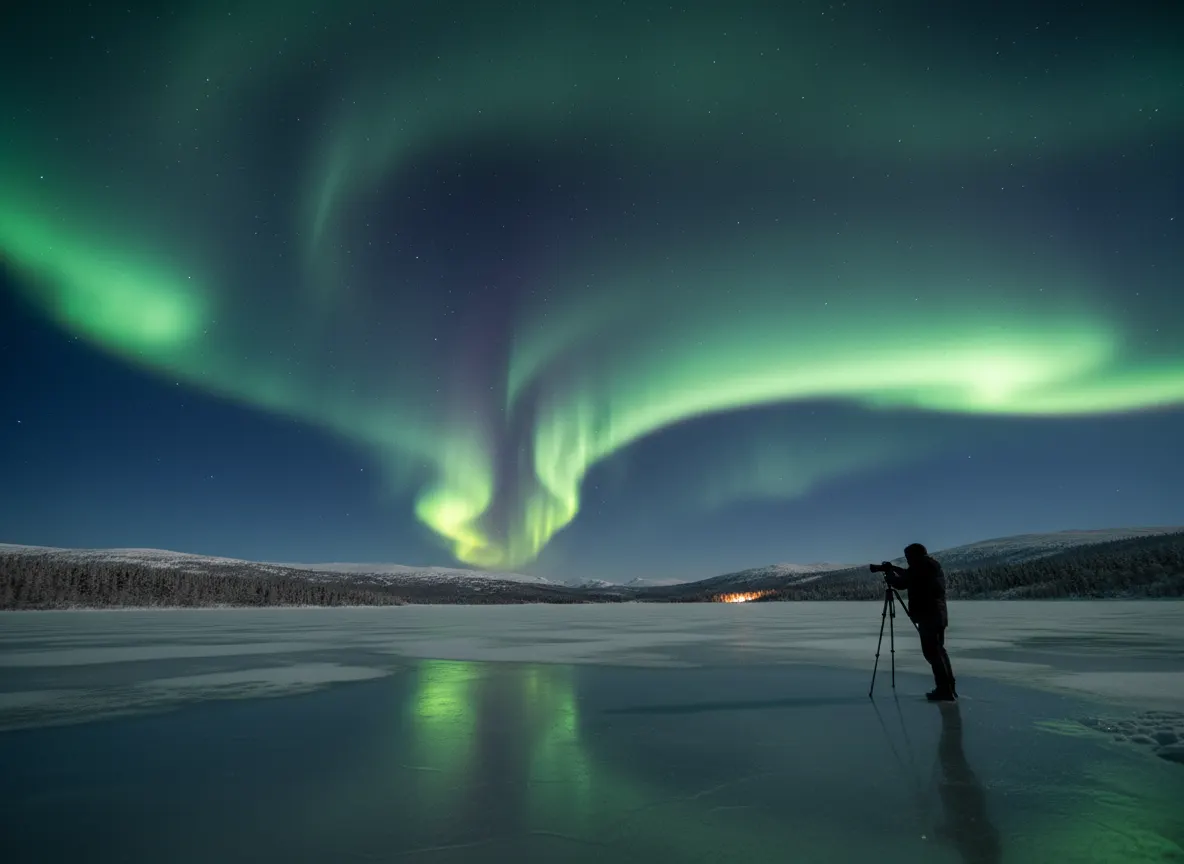
- A small tripod: Northern Lights photography needs a steady, long exposure. Even a compact travel tripod transforms your results.
- Avoid condensation: when you come indoors, seal your camera in a bag before it warms up so moisture forms on the bag, not the lens.
- Phone power bank: phones can shut off in the cold even with charge remaining, so keep them warm and topped up.
The small things people forget
These weigh almost nothing but make the trip noticeably more comfortable.
- Lip balm and a rich moisturiser, as the dry Arctic air is harsh on skin.
- Sunglasses, since low winter sun off bright snow is dazzling.
- A reusable water bottle, because heated indoor air dehydrates you more than you expect.
- A universal travel adapter for European sockets and any personal medication in your hand luggage.
- Swimwear, genuinely, for the sauna and any hot-tub or ice-swimming moments.
What you can safely leave at home
Pack lighter than instinct suggests. You rarely need a large formal wardrobe, and heavy expedition gear is better sourced locally than flown across the world.
- Bulky expedition suits and boots, which you can rent on arrival.
- Excessive "just in case" outfits, as most days you'll live in your layers.
- Cotton hoodies and jeans, which are poor in real cold and slow to dry.
Finland uses the euro and card payments are accepted almost everywhere, so you needn't carry much cash. For more seasonal advice, our travel guides cover the aurora season and day-to-day life in Lapland.
Not sure whether to pack or rent a particular item for your dates? Message our team on WhatsApp and we'll tell you exactly what to bring and what we can provide, then help you build the right trip around it.
Ready to Experience It?
Plan Your Lapland Trip
Small groups, aurora guarantee, full Arctic gear included.