Lapland Wildlife Guide: What Animals Will You Actually See?
TL;DR: On a typical Lapland trip you're guaranteed to meet huskies and reindeer up close on guided safaris, and you'll likely spot local birds and small mammals along the way. Truly wild animals — like elk, foxes and the rare predators — do live here, but sightings are a lucky bonus, not something any honest operator can promise.
The animals you're almost certain to meet
Most visitors come to Lapland picturing snow, the Northern Lights and animals — and the animals part is very achievable, because the headline encounters happen on managed safaris rather than by chance in the wild.
- Huskies: On a husky safari you'll meet a whole kennel of energetic sled dogs, learn how a team works together, and usually take the reins yourself. They're friendly, vocal and love attention.
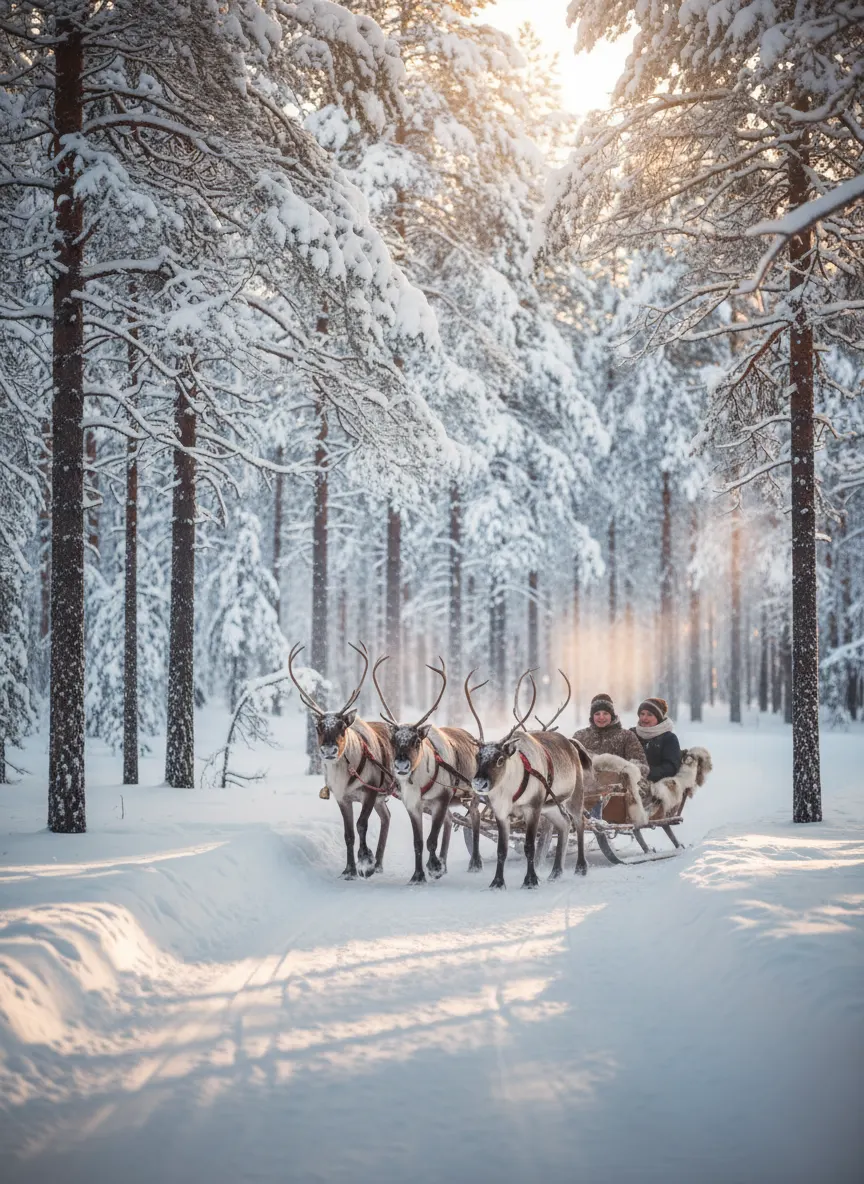
- Reindeer: Semi-domesticated reindeer are central to Sámi culture and easy to meet on a reindeer farm visit or sleigh ride. You can often feed them and hear how herding still shapes life in the Arctic.
- Farm and sled animals: Depending on the programme, you may also meet Icelandic-style horses or other hardy animals kept by local families.
These experiences run across the winter season and form the backbone of most of our tour packages, so if meeting animals is a priority, you're in the right place.
Wild animals that live in Lapland
Finnish Lapland is genuinely wild country, and a rich cast of animals lives in the forests and fells. Seeing them is another matter — they're shy, well camouflaged and spread across a vast, thinly populated landscape.
- Elk (moose): Large and surprisingly elusive; sometimes glimpsed from the road at dawn or dusk.
- Foxes: The red fox is widespread, and the rare Arctic fox clings on in the far north.
- Hares, squirrels and lemmings: The small mammals you're most likely to actually notice.
- Predators: Brown bear, wolf, wolverine and lynx all live in Finland, but they're famously hard to see and mostly avoid people. Bears also hibernate through the winter months.
Be gently sceptical of any promise of guaranteed wild sightings. Nature doesn't work to a schedule, and the most trustworthy guides will tell you exactly that.
Birds and the frozen world underfoot
Birdlife is easier to enjoy, especially for patient travellers who slow down and look. In winter you might notice the Siberian jay following you hopefully near a campfire, willow grouse, or owls in the quieter forests. Summer brings a spectacular return of migratory birds under the Midnight Sun.
Even the smallest tracks in fresh snow tell a story — hare, fox and bird prints crossing your trail are a reminder of how much life moves through the landscape unseen.
Winter or summer: how the season changes your chances
When you visit shapes what you'll see, so it's worth matching your trip to your hopes.
- Winter (roughly late autumn to early spring): Peak season for husky and reindeer safaris, snowy scenery and the aurora, which is possible from around late August to early April. Many wild animals are less active and bears are hibernating.
- Summer: Under the Midnight Sun, birdlife is abundant, forests are green, and you may have better luck spotting elk and other mammals during long, light evenings.
Not sure which season fits you best? Have a browse of our other guides, or simply message us with your dates and we'll talk you through the trade-offs honestly.
Meeting wildlife responsibly
Good encounters are respectful ones. A few simple principles keep both you and the animals safe and comfortable.
- Keep a calm, quiet presence around animals and follow your guide's lead.
- Never feed wild animals, and only feed farm animals when your guide invites you to.
- Give wildlife space — use a zoom lens rather than approaching for a closer photo.
- Dress warmly so you can stay still and patient; the best sightings reward those who wait.
Staying warm matters more than people expect, because shivering visitors cut experiences short. If you'd rather not buy heavy winter kit for one trip, our winter clothing rental has you comfortably covered.
Planning your trip
Wildlife is only one piece of a Lapland holiday, and it slots neatly alongside the Northern Lights, snowmobiling, glass igloos and Santa Claus Village. If you're travelling from outside the Schengen area, do check whether you need a visa and apply well in advance — our visa guide explains the essentials.
Every group is different, so the best plan is one built around what you most want to see. Tell us your dates, who's travelling and which animals top your list, and we'll shape an itinerary to match — message our team on WhatsApp and we'll help you plan a trip you'll remember.
Ready to Experience It?
Plan Your Lapland Trip
Small groups, aurora guarantee, full Arctic gear included.