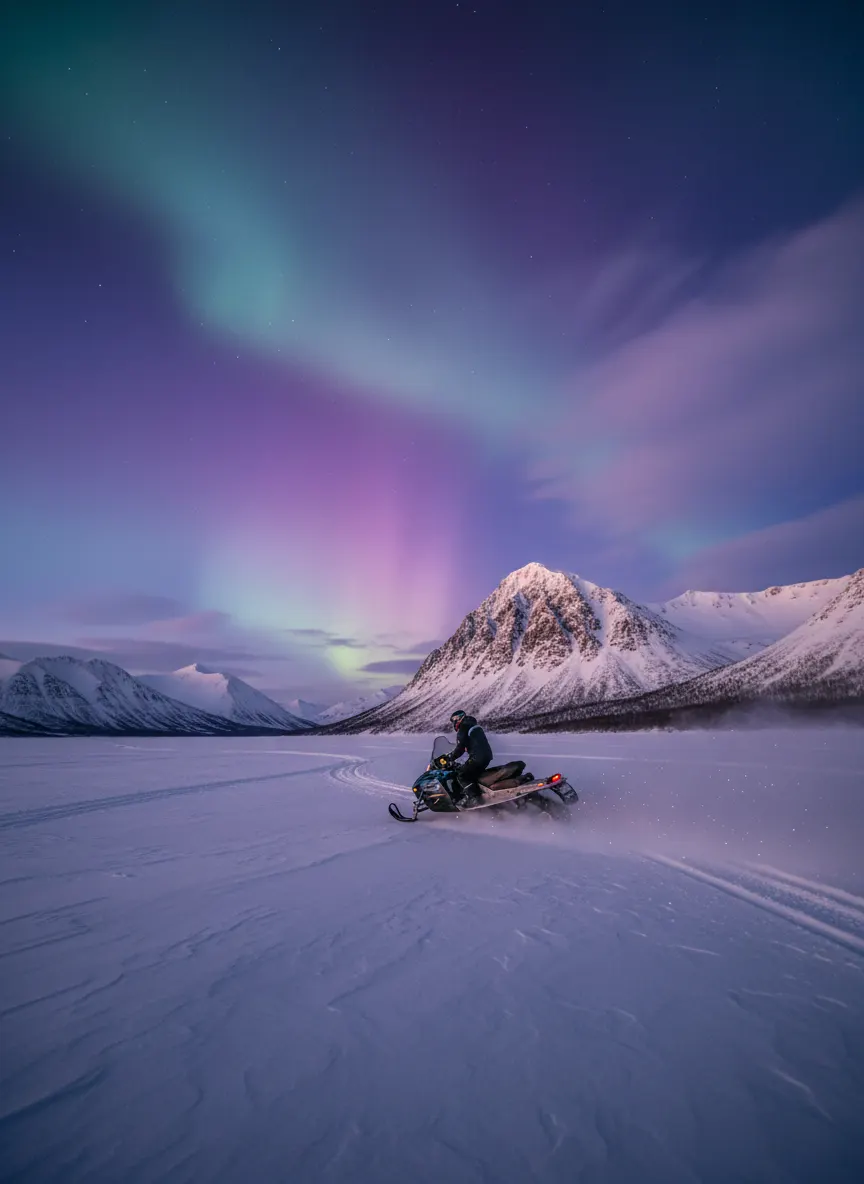
What Is the Kp-Index and How Does It Predict the Northern Lights?
TL;DR: The Kp-index is a simple 0–9 scale that measures how disturbed the Earth's magnetic field is, which tells you how far south the Northern Lights are likely to be visible. In Finnish Lapland, you sit so far north that even a low Kp can deliver a wonderful display — so clear, dark skies matter far more than chasing a big number.
What the Kp-index actually measures
The Kp-index (the "K" stands for a German word for characteristic, "p" for planetary) is a global measure of geomagnetic activity. When charged particles from the Sun stream towards Earth and interact with our magnetic field, they cause disturbances. Scientists across a network of observatories measure those disturbances and combine them into a single figure from 0 (very quiet) to 9 (extreme storm).
Crucially, a higher Kp does not mean "brighter" lights everywhere. It mainly tells you how far the auroral oval — the ring of activity around the magnetic pole — expands towards the equator. The bigger the number, the further south people can see the aurora.
Why the number matters less in Lapland
This is the key point most first-time visitors miss. Rovaniemi, Levi and Ruka-Kuusamo all sit beneath or very close to the auroral oval. That means the lights are often overhead even when activity is modest.
- Kp 0–2: Still very possible in Lapland. Faint arcs and gentle green bands are common on clear nights.
- Kp 3–4: Often a lovely, active display this far north, with movement and structure.
- Kp 5+: A geomagnetic storm — can be spectacular, and visible much further south than Lapland.
So if you are booking a trip to Finnish Lapland, you do not need to wait for a rare storm. You need clear skies, darkness away from town lights, and a little patience.
How to read an aurora forecast
Most aurora apps and websites show a current or predicted Kp value, sometimes as a coloured map. Here is how to use them sensibly:
- Check the short-term forecast. The most reliable predictions cover the next hour or so, based on live readings of the solar wind arriving at Earth.
- Watch the trend, not one number. Activity comes in waves. A quiet hour can be followed by a sudden burst, so it is worth staying out and re-checking.
- Combine it with a cloud forecast. A high Kp under thick cloud shows you nothing. A low Kp under crystal-clear skies can still be magical.
- Trust your eyes and a camera. The aurora is often more visible to a long-exposure phone photo than to the naked eye, especially when faint.
The things that matter more than Kp
Seasoned guides will tell you that a good aurora hunt is mostly about fundamentals rather than chasing a big forecast:
- Darkness. The aurora season runs roughly from late August to early April, because you need genuinely dark skies. In midsummer the Midnight Sun makes them invisible.
- Clear skies. Being mobile — able to drive to a gap in the clouds — hugely improves your chances. This is where a local guide earns their keep.
- Getting away from light pollution. Even a short drive from a resort into open countryside or beside a frozen lake transforms the view.
- Time and patience. Displays can appear at any point through the dark hours. Warm clothing and a hot drink make the waiting part of the fun.
If you would rather leave the forecasting, the driving and the warm base to someone else, our guided Northern Lights tours and packages are built around exactly this — flexible routes, local knowledge of where the skies are clearing, and comfortable spots to wait.
Planning a trip around the aurora
Because no one can promise the lights on a given night, the smart approach is to give yourself several nights and fill the days with other Arctic experiences — husky and reindeer safaris, snowmobiling, glass igloos and Santa Claus Village near Rovaniemi. That way your holiday is wonderful regardless of the Kp reading.
- Stay multiple nights to improve your odds against cloud.
- Come prepared for the cold. Proper thermal layers make hours outdoors comfortable; if you would rather not buy everything, our winter clothing rental covers you.
- Sort your paperwork early. Many travellers need a Schengen visa for Finland, so apply well in advance — our visa guide walks you through it.
For more seasonal tips and destination guides, browse our travel blog.
The bottom line
The Kp-index is a genuinely useful tool, but think of it as a barometer rather than a promise. It tells you how widespread aurora activity is, not whether you personally will see it tonight. In Finnish Lapland, your best "forecast" is a clear, dark sky and the willingness to stay out a little longer.
Planning your dates or want a tailored quote for your travel window? Message our team on WhatsApp and we'll help you build a trip that gives you the best possible shot at the lights.
Ready to Experience It?
Plan Your Lapland Trip
Small groups, aurora guarantee, full Arctic gear included.